
In This Corner
The Fuse That Lit The Fire
Jackie Robinson broke baseball’s color barrier, but his struggle isn’t over yet

Grading Education Reform
Efforts to improve schools in Massachusetts have raised test scores, but an achievement gap remains, report Tufts professors
By Marjorie Howard
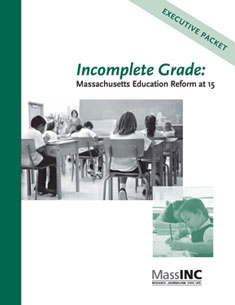
Education reform in Massachusetts has helped raise student performance, but much more needs to be done to close the achievement gap between middle-class and low-income students, according to a report co-authored by two Tufts professors.
The report, “Incomplete Grade: Massachusetts Education Reform at 15” was written by Thomas Downes and Jeffrey Zabel, both associate professors in the economics department in the School of Arts and Sciences, and Dana Ansel, the research director for MassINC, a non-partisan think tank. The two-year study was funded by the Bank of America.
Released in May, the report reviews changes undertaken by Massachusetts under the 1993 Education Reform Act, which include raising academic standards, adjusting local aid to help lower-income communities and establishing standardized tests called the Massachusetts Comprehensive Assessment System, better known as MCAS.
“The idea that the relationship between a student’s zip code and his or her level of achievement would be substantially reduced was a truly bold vision,” write the authors. “At 15 years into the work of reaching that vision, the results are decidedly mixed…If the simple question—has the achievement gap closed—is asked, the answer is no.”
The reforms, say the authors, raised student performance overall and turned around a decline in student performance in lower-performing districts. Nevertheless, the state’s wealthiest districts made the biggest academic gains. Had the state not increased school funding and adopted more rigorous academic standards, the report says, the achievement gap would have been far worse. The standards, the report says, “have become national models of rigor and quality.”
However, much more needs to be done. Among the report’s recommendations are longer school days, an increase in the number of charter and vocational schools, merit pay for teachers and incentives to encourage more teachers to work in high-poverty areas.
The report garnered widespread attention in Massachusetts when it was released, including editorials in the Boston Globe and the Boston Herald. The Globe agreed with the report’s recommendations and columnist Scott Lehigh commended the authors for a proposal to raise the cap on charter schools.
Marjorie Howard can be reached at marjorie.howard@tufts.edu.